
4chan
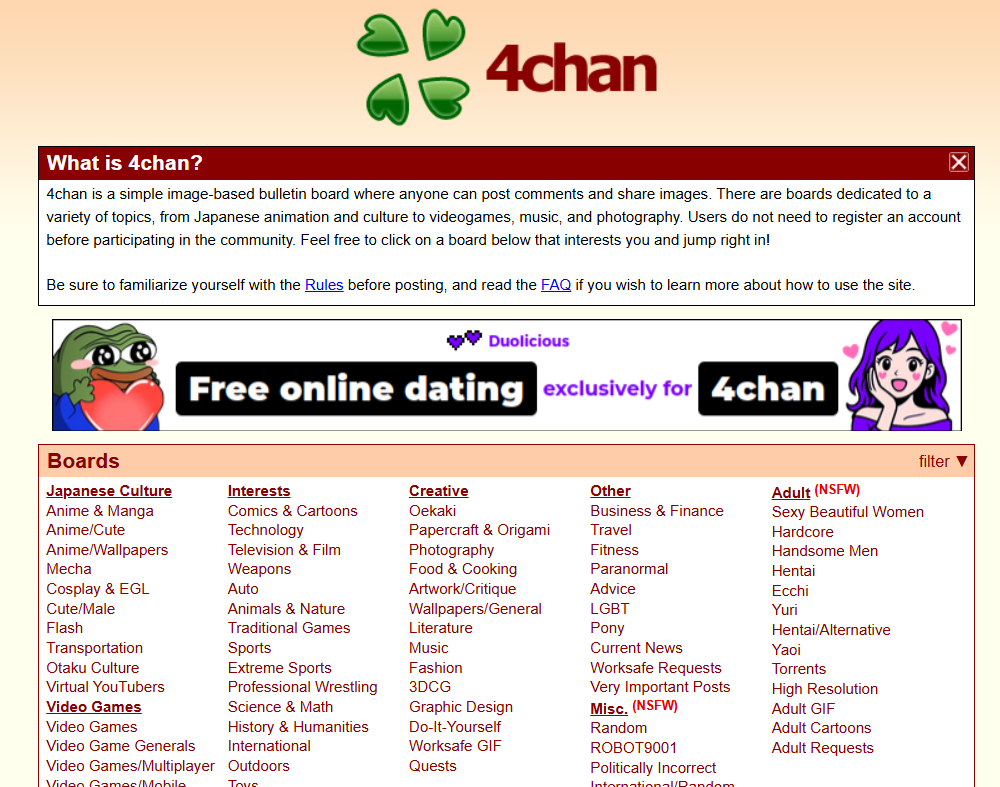
4chan is a raw, unfiltered imageboard where users post anonymously with minimal moderation. Known for its chaotic culture, memes (“Rickrolling,” “Pepe”), and internet subcultures, it operates on a no-archive, no-account system—threads disappear unless actively bumped.
Key Features:
🔥 Complete Anonymity – No usernames, just “Anonymous.”
🔥 Boards (/b/, /pol/, /a/, etc.) – Topic-based sections (SFW/NSFW).
🔥 Ephemeral Threads – Posts expire without activity (default bump limit: 300-500 replies).
🔥 Memes & Viral Trends – Birthplace of “LOLcats,” “Dogecoin,” and many internet phenomena.
🔥 Minimal Rules – Outside illegal content, almost anything goes.
4chan Culture & Impact
Meme Factory: Origin of “Anonymous,” “Harlem Shake,” “Trollface.”
Controversy: Raids (e.g., “Project Chanology”), harassment campaigns.
Influence: Shaped internet humor, inspired platforms like Reddit and Discord.
How 4chan Works
Pick a Board – Each has its own rules (e.g., /b/ is NSFW, /mu/ is music).
Post Anonymously – Text, images, or replies (no registration).
Threads Die Fast – Bump with replies or lose them forever.
Why Use 4chan?
✔ Uncensored free speech (for better or worse).
✔ Real-time discussions with zero filter.
✔ Internet history in the making (memes, leaks, subcultures).
⚠ Warnings:
NSFW/Extreme Content: Gore, porn, hate speech exist.
No Moderation: Self-policed by users (flagging/reporting is limited).
Not for the Faint-Hearted: Expect trolling, offensive jokes, and chaos.